Tour 1.
St Gastyn Church
A beautiful church by the lake
St Gastyn
Llangasty-Talyllyn
Brecon
LD3 7UG
Grade 2* Listed building
Listed since = 17th January 1963
Date Visited = 8th Febuary 2026
This is from the church leaflet when you visit the church.
Llangasty-Tayllyn - What does it mean?
Talyllyn is quite a common Welsh place-name, either on its own or (as here) as part of a compoound name. It means simply "end" (or edge) of the lake. The very common word "llan" is a little more dificult. It is sometimes translated as "church" or "parish" but neither of these is quite correct; the word was in use long before parishes came into existence, and there is a different Welsh word - eglwys- for a church (i.e the building). Llan indicates an enclosure or clearing, in which might be a small crude church and a few, even cruder, dwelling huts. This was the normal pattern of the earliest Celtic Christian settlements. Frequently the word "llan" is attached to a name, e.g Llandewi (St David) Llanbedr (St Peter). So it is here - the place (or church) of St. Gastyn at the edge of the lake.
St Gastyn.
Few Readers of this page will have heard of St. Gastyn - he was never formally canonised, he appears in no saints' calendar, and this is the only church in the world dedicated to him. He was one of the large number of holy men, who with their followers, kept the flame of the christian faith burning in the western, celtic, extremities of the British isles and Brittany during the fifth and sixth centuries AD., while the rest of western Europe was at the mercy of pagan invaders. Inspired by saints such as David, Patrick and Columba they established from small beginnings a strong, well-organised Church a hundred years and more before Augustine came to Canterbury. Gastyn ( also spelt Gastayn and in the Latin form Castanius) is believed to have been of Breton origin, but only two facts are known of him for certain. He founded the "llan" on this site and he baptised, and was the tutor of, St. Cynog - which is helpful, since we know quite a lot about Cynog. He was one of the sons of Brychan, the king of Brycheiniog (Brecknock) and was a leader of the Church in the mid-fifth century A.D. This suggests that the first church was built on this site about 450A.D. at the latest, and makes it one of the earlist church sites in central Wales.
Before reading further, picture the scene at that time. Much less cultivated, of course, but otherwise little different from today. The hills around would have looked much the same, the lake in all its moods, the meadows alongside, the reeds and the birdlife; and Gastyn with his little party of the faithful deciding that it was here that they would make their enclosure and build their dwellings and their church. That there has been a church on this site ever since is certain, and there are occasional references to it in the records, but little detail is known. It must have been enlarged and rebuilt many times, particularly in the early years. One such rebuilding was probably in the mid-16th century, a tower being added about 1670.
The present building
In the mid-19th century the church was again in a bad state of repair; it was described in 1838 as "a dark, ancient and decaying edifice". with a dwindling congregation and an absentee rector, there was few to care for it. To the rescue came a young, wealthy, recently married couple from Yorkshire, Robert and Frances Raikes. Robert ( a kinsman of the earlier Robert Raikes who is associated with the founding of the Sunday school movement) had been at Oxford in the 1830s, and had come under the influence of the Oxford Movement, to such an extent that he gave up his partnership in the family bank to look for a country parish in which he could put his Tractarian ("High Church") principles into practice. This he found at Llangasty, where in 1847 he engaged an architect to rebuild the church, and to build a church school ( near the entrance to the churchyard, since 1925 a private house), and house for himself. The architect was a young man named John Loughborough Pearson, then little known, but later to become one of the leading architects of the Victorian period, responsible for Truro Cathedral, and many other important buildings in the "Gothic Revival" style.
The exterior
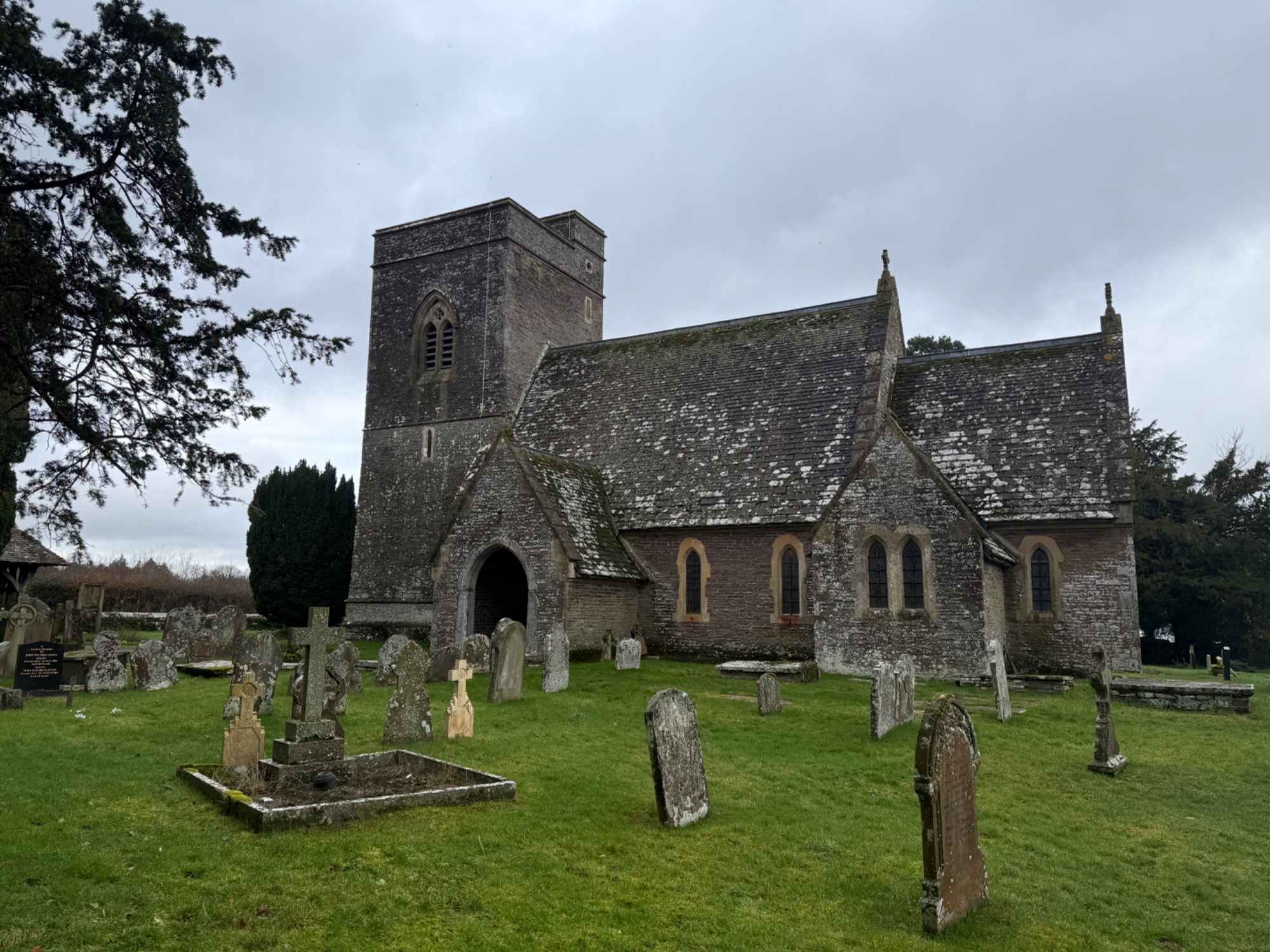
Pearson had to rebuild the church almost completely. Part of the tower was incorporated and faced with new stone, a small area of the original stonework being still visible near the base. The roof is of stone tiles, a fairly common roofing material in this neighbourhood until recently, but seldom seen to such good effect as here.
The interior
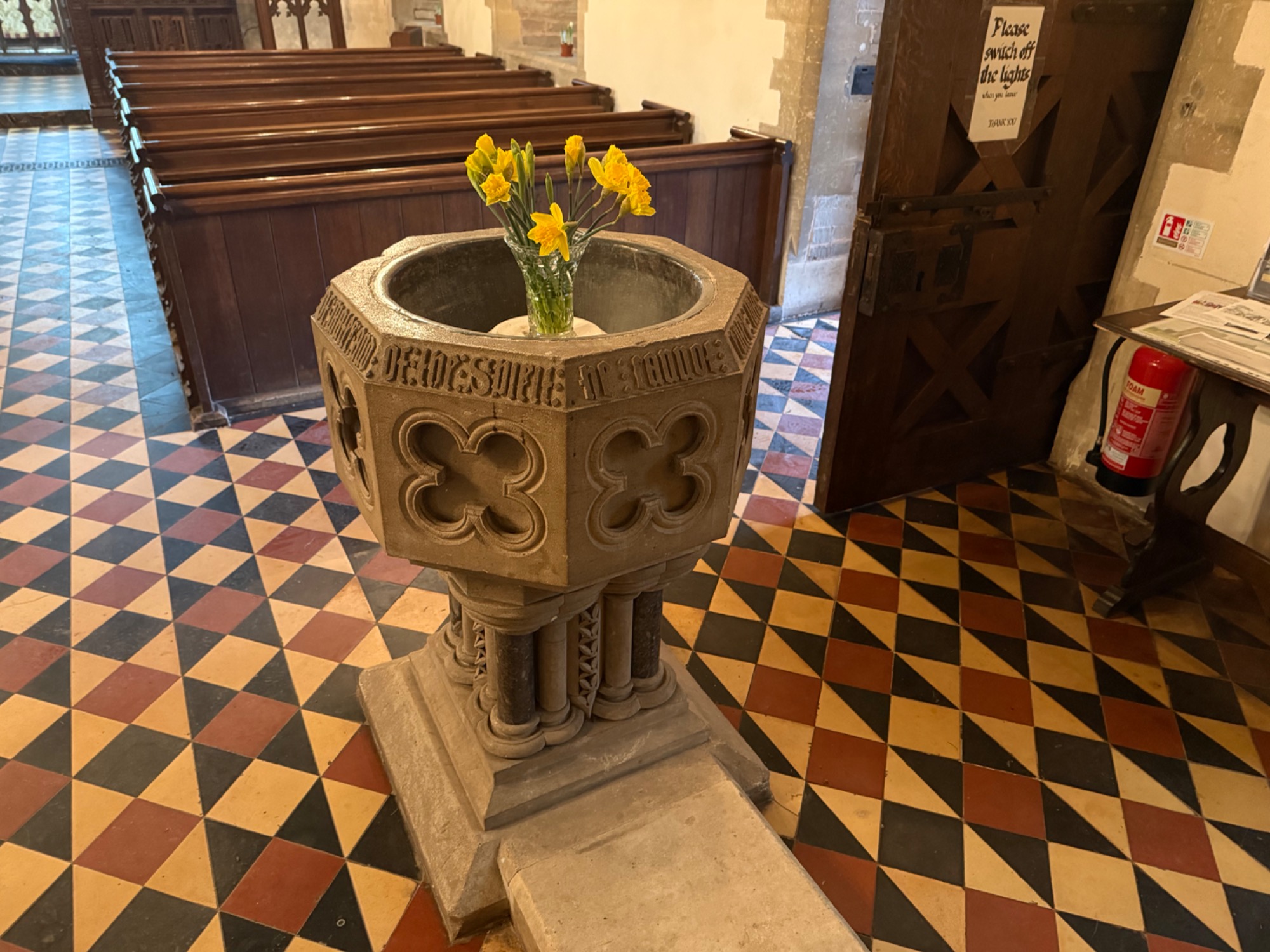
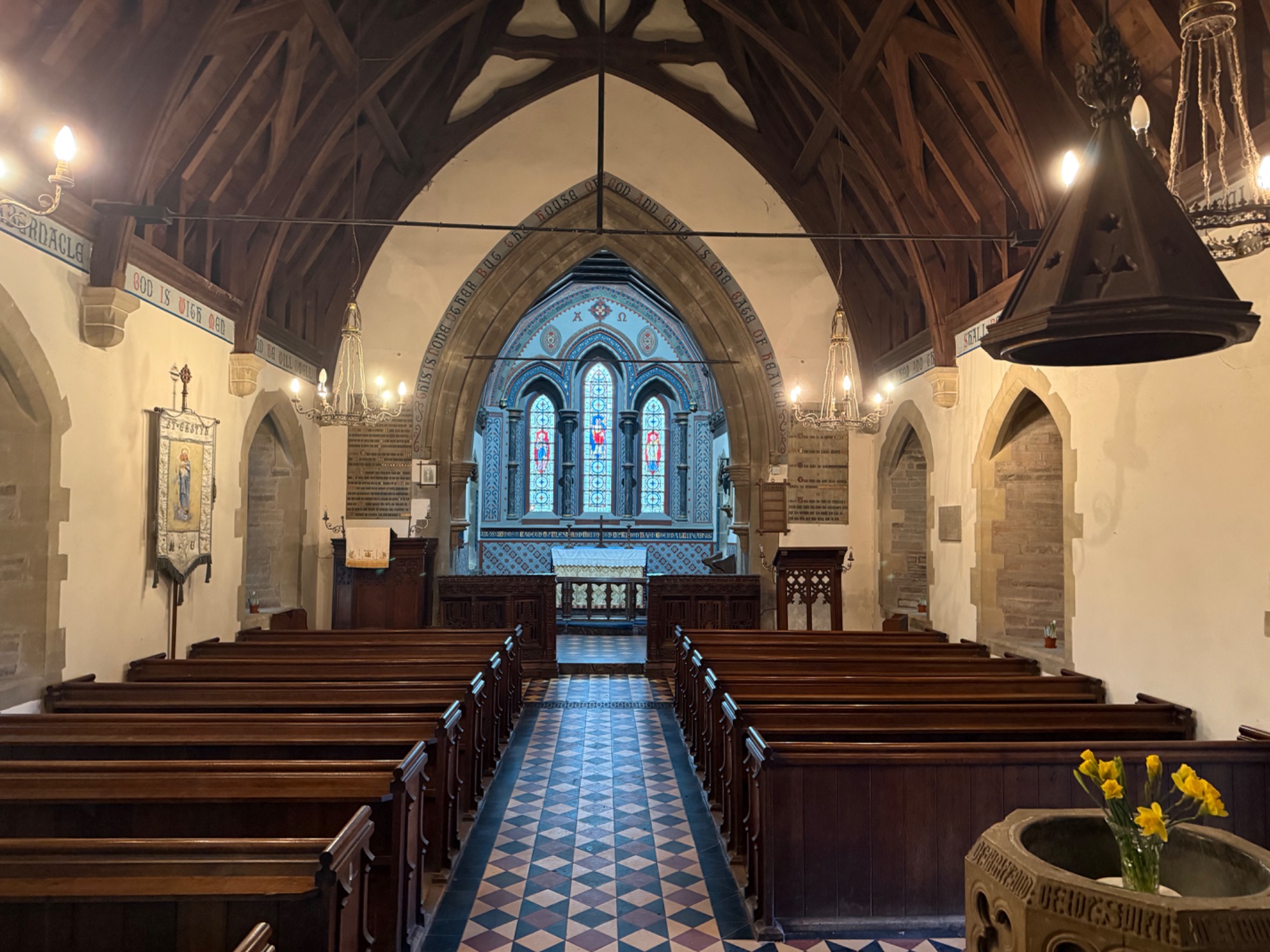
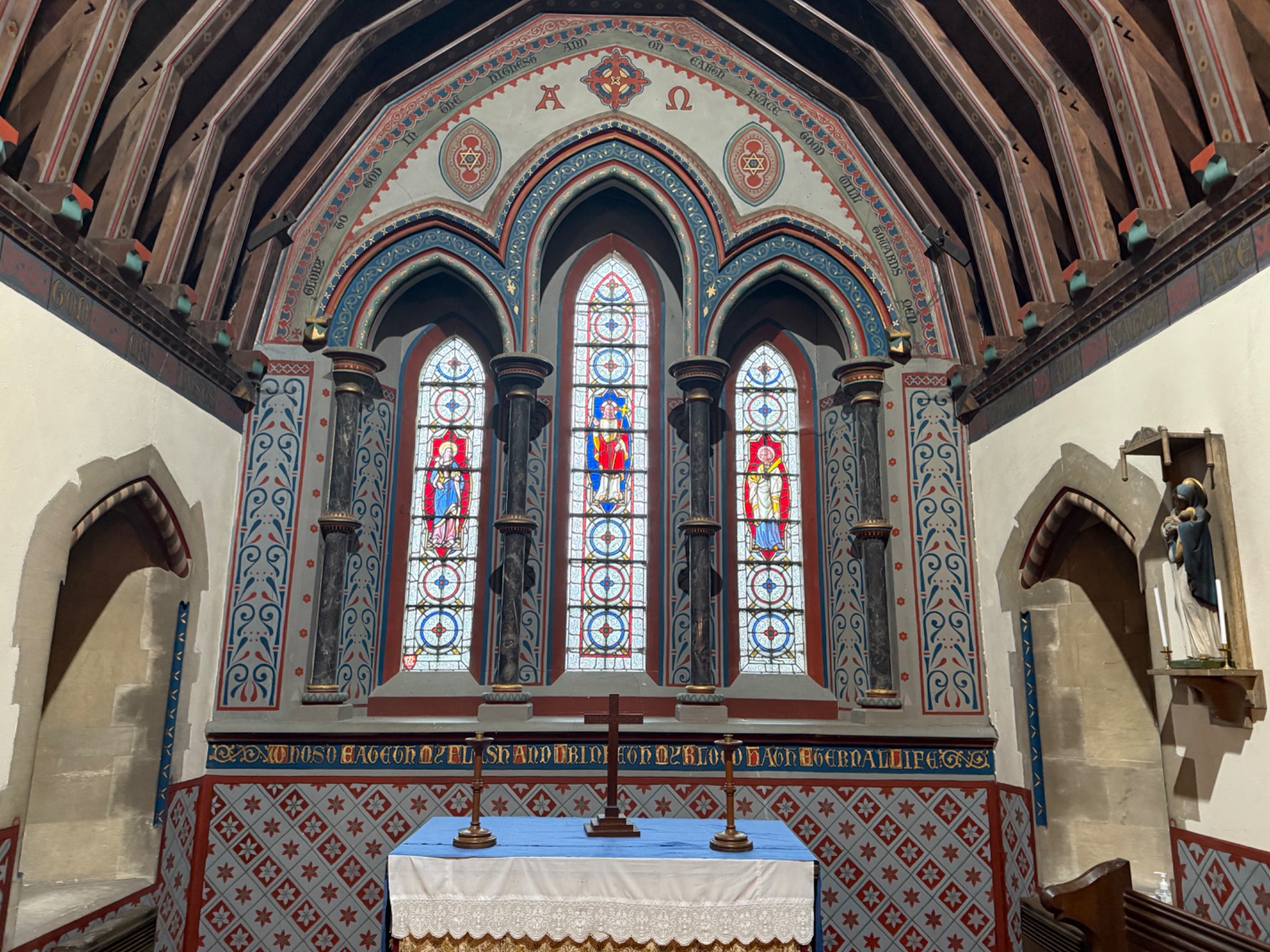
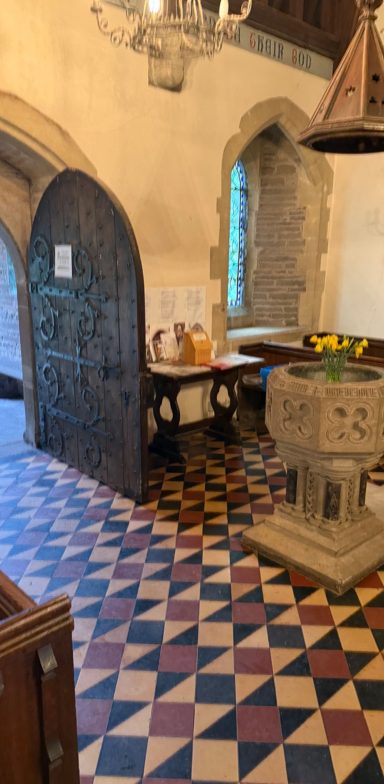
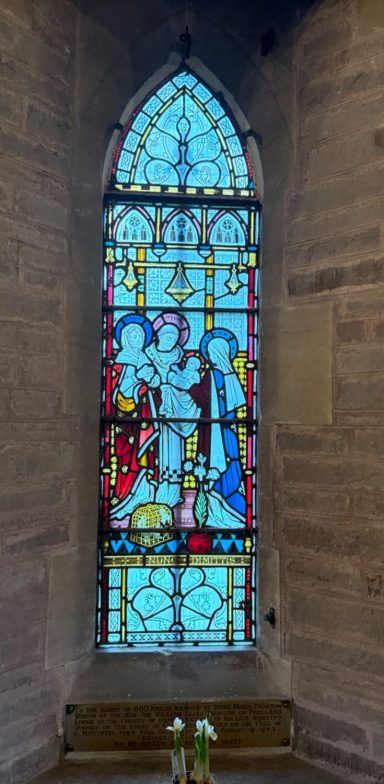
The church contains many features associated with the Tractarian movement, including the east window with three lights in recesses with slender marble pillars; the succession of three steps from nave to altar; the fine metal screen between the chancel and organ chamber; and the richly coloured stencil and "diaper" work around the nave walls and in the chancel and sanctuary. (This work was re-painted in 1970, when Pearson's original colours and design were faithfully reproduced).The East and West stained glass windows date from 1847.while those in the nave are more recent.
The screen between chancel and nave is probably the only surviving furniture from the earlier church, dating from the 17th century, but with some later repair works. The bells are dated : No 1= 1878; No 2 = 1714; No 3 -=1674;Tenor 1674- the last three having hung in the original tower. The organ (early 19th century, by J.W. Walker of London) was purchased and installed in 1850.
Later Years
Pearson's building was ahead of its time, and was something of a rarity for a rural area. The same can be said of the practice of daily services, the surpliced choir, and the high standard of music and worship, - Tractarian features which characterised the period following the re-building. As the years passed, mid-Victorian attitudes brought more universal concern for churches and their use. Llangasty ceased to be regarded as a trail-blazer, and became instead a more conventional country parish.
The parish
This story of the church would not be complete without a brief description of the parish which it serves. The reader will probably realise that there is no "village" of Llangasty-Talyllyn. There is no shop, pub or post office, not even a collection of houses apart from the hamlet of pennorth 2km away. The scattered population of about 140, mainly engaged in agriculture, has changed little over the years. Surprisingly perhaps, it has a strong community spirit, which it is privileged to live; something also, perhaps, to a tradition of rural solidarity in earlier, harsher centuries - centuries throughout which Gastyn's church has represented the greatest, at times the only element of stability and continuity.
Gallery
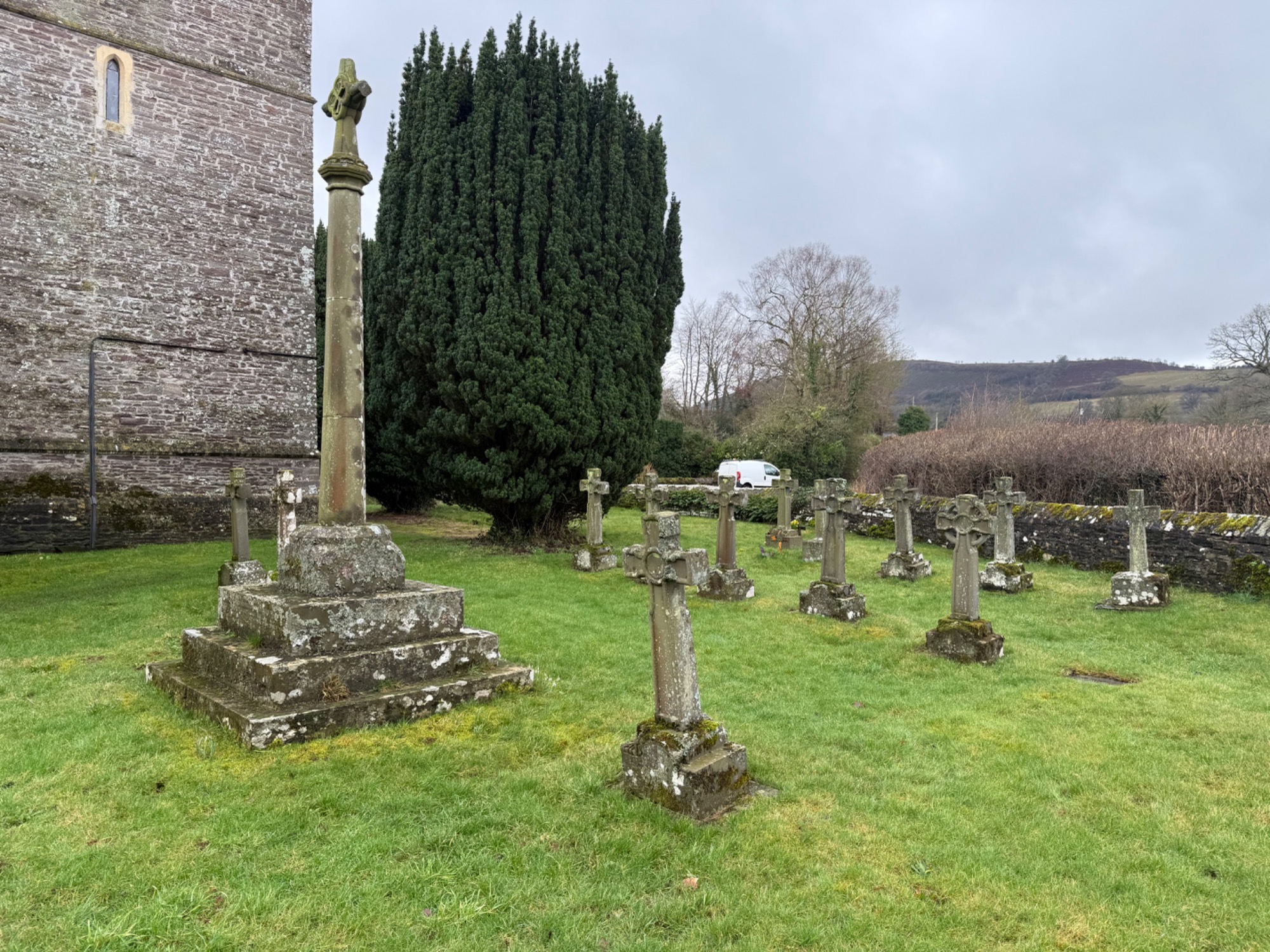
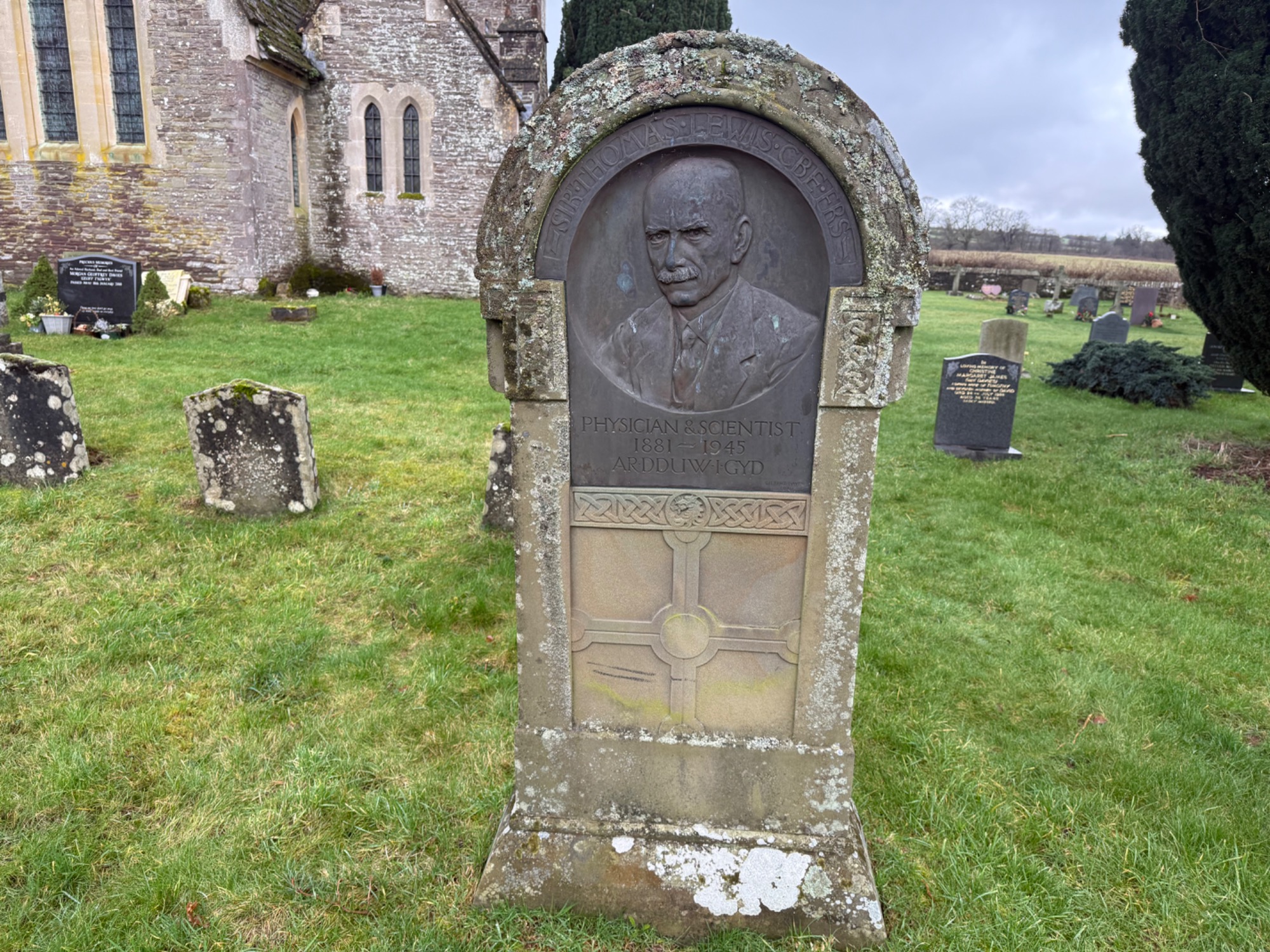
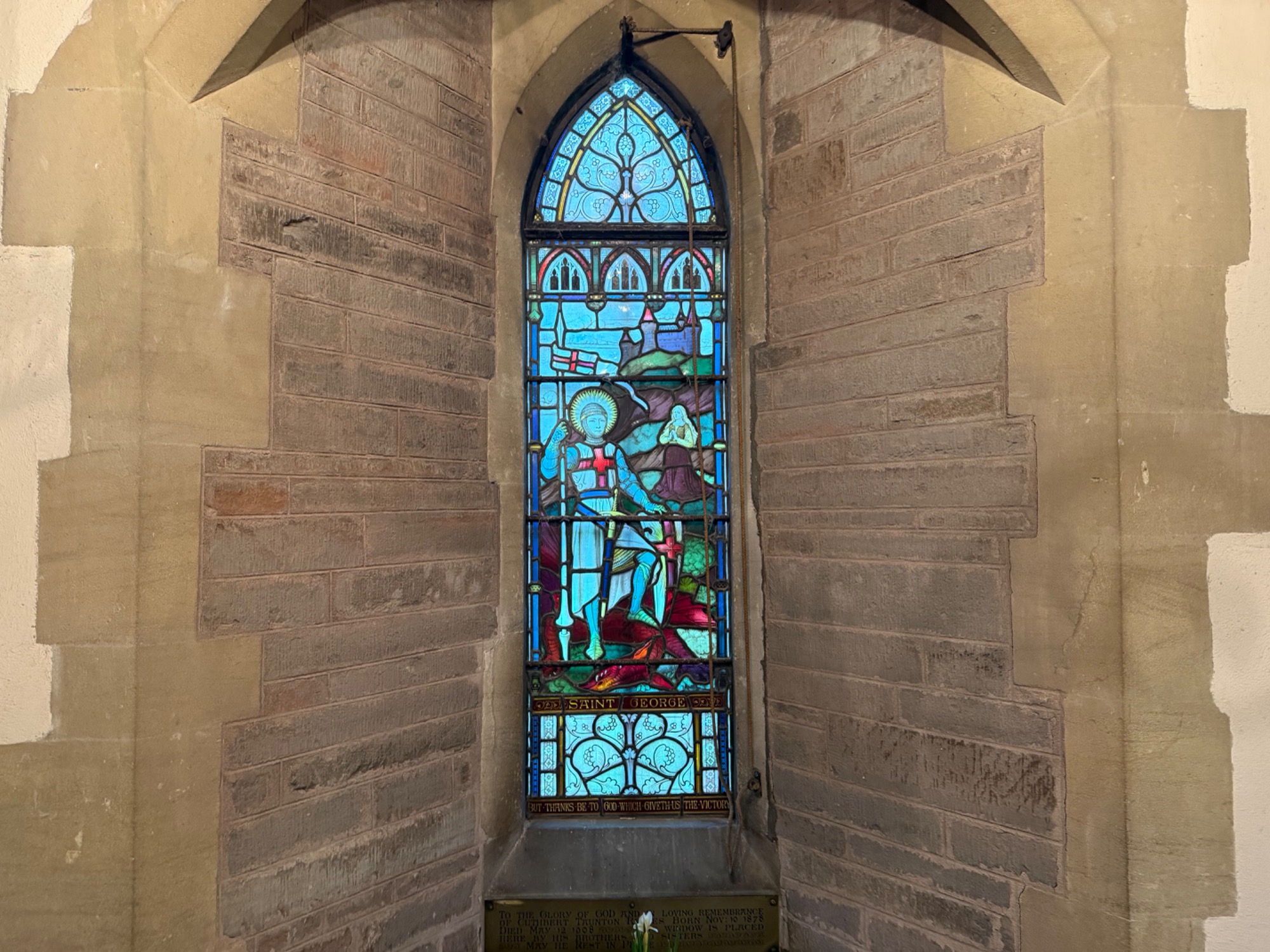
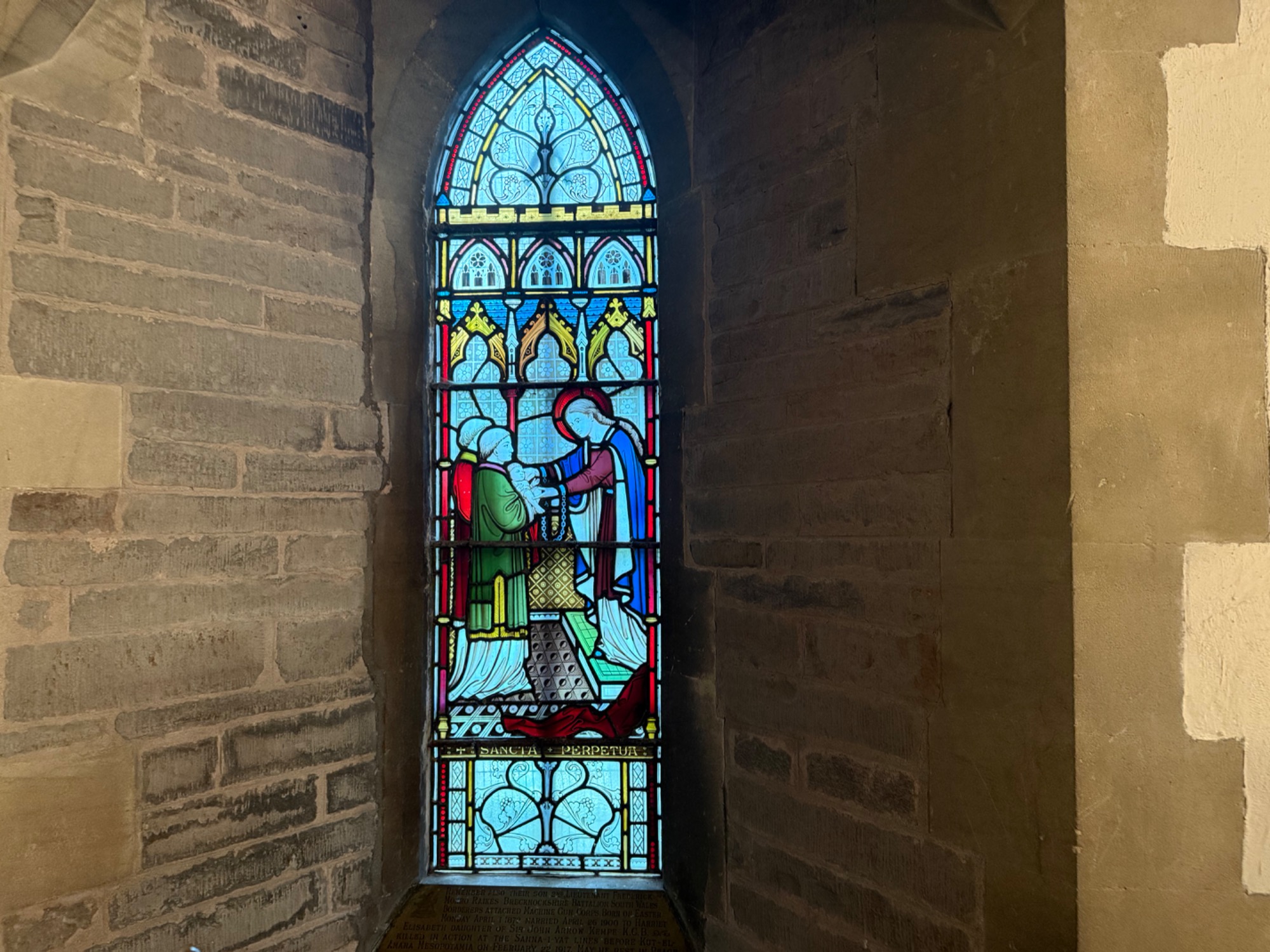
Here are some pictures of St.Gastyn's church All pictures on this site are taken by me, and will be available to buy in the coming months.
What did i really think about this church?
Tour score 8/10
Spooky score
3/10
To get to the church by car Isn't too bad. Once you turn off the A-40 you have to travel down country lanes for about 3 miles (around 10-15 mins) These roads are fairly tight and full of potholes. Once at the church there is plenty of parking for at least 10+ cars.
Reasons to visit.
1= Grade 2* listed building. 2=Almost complete Tractarian Interior. 3=Stunning views and Lake. 4= Ten Beautiful stained glass windows. 5= Very well kept Graveyard. 6= Around eleven Yew trees of which three are ancient. 7= Important gravestones. 8= The church cross.
I really enjoyed visiting this church, I came here early February, the church was open but the lake was flooded. I would recommend visiting in Summer so you can enjoy the scenery more, and maybe take a picnic by the lake. Absolutely stunning!
Spooky score of 3. The lights work, and door stays open. However it is remote and the organ room is locked and felt a bit creepy. Overall i felt ok as i walked around.
My Youtube Video of this church
Please hit Like and Subscribe.